What is the Cost Of Contesting A Will?
Wills| 28.09.2026
There is no single fixed cost to contest a will. The amount depends on the type of claim, the evidence needed, the strength of the claim, the other side’s response and how far the dispute proceeds (including if it goes to court). In England and Wales, a caveat currently costs £4, while issuing a non-money claim costs £663 in the High Court or £387 in the County Court. In addition, you may need to cover fees for legal work, mediation, experts, hearings, and exposure to the other side’s costs.
Key Points
- Current HMCTS charges include £4 for a caveat, £663 to issue a High Court non-money claim and £1,334 for a multi-track trial fee.
- You may also face fees for legal work, mediation, experts, hearings, and exposure to the other side’s costs
- Losing a will validity claim can leave you paying a substantial part of the successful side’s reasonable and proportionate costs.
- Before contesting a will it is important to seek legal advice to ensure that you do not waste money where no valid case exists

Do you have grounds for contesting a Will?
If you are considering contesting a will, one of the first questions you're likely to have is: How much will it cost? The £4 caveat fee to pause a grant is nothing compared to the full cost of challenging a Will. As specialists in private client matters, we can help you prepare a staged budget and assess adverse costs risk. Here we set out the court fees, funding options and cost controls that shape the price of contesting a will.
What will I have to pay if I contest a will?
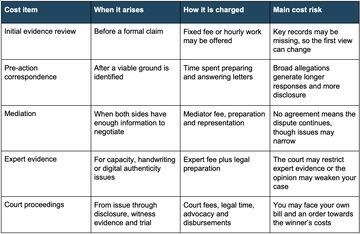
There is no standard fee for a will dispute in England and Wales as it depends on a wide range of factors. You normally pay your own legal team and disbursements as the dispute progresses, subject to the funding agreement you sign. The bill may include advice, document review, correspondence, witness statements, mediation, barrister’s fees, experts and court charges. Complexity (and therefore cost) rises where several wills, disputed capacity, allegations of coercion, missing records, multiple beneficiaries or an urgent application require additional work.
We always recommend getting a written estimate for each stage and the assumptions behind it, including VAT and third-party payments. The estimate should separate the cost of assessing prospects from the cost of pursuing proceedings. A short merits review based on the will, earlier wills and the drafting file can prevent a weak concern from becoming prolonged litigation.
Costs when challenging a will
How much are the court fees to challenge a will
The basic court fees for challenging a Will are as follows:
- Probate caveat: £4.
- A non-money claim: £663 in the High Court or £387 in the County Court.
- Every probate claim is allocated to the multi-track, where the current trial fee is £1,334.
Who pays the other side’s costs?
CPR 44.2 states that “the general rule is that the unsuccessful party will be ordered to pay the costs of the successful party”. As such, each side usually funds its own case while proceedings continue. At the end, the court decides whether one side must pay part or all of the other side’s costs. The starting rule favours the successful side, subject to the judge’s discretion. The final order depends on a range of factors, including the conduct of the parties involved, any settlement agreement reached, proportionality, and unreasonable refusal to use alternative dispute resolution.
In most will disputes, the losing party may be ordered to pay a significant proportion of the winning party’s legal costs. However, the court can make a different costs order if the circumstances justify it. This means that even if you succeed, you may not recover every pound you have spent. If you lose, you may have to pay some of the other side’s costs as well as your own.
In some probate cases, the court may decide that costs should come from the estate, or that each person should pay their own costs. This can happen, for example, where the person who died caused the dispute, or where the situation genuinely needed to be investigated. These are exceptions, not a guarantee. The fact that there is money in the estate does not mean the estate will automatically pay everyone’s legal costs.
Think carefully about settlement offers
A sensible settlement offer can affect who pays legal costs, even if the case later goes to court. Before accepting or rejecting an offer, look at the overall result, not just the amount you might receive from the estate. Consider:
- What you may inherit under the proposed agreement
- Your legal costs to date
- Any tax consequences
- Whether you may have to contribute towards the other side’s costs
- The cost and risk of continuing the dispute
Rejecting a reasonable offer can sometimes lead to an unfavourable costs order later, even if you achieve some success at court. It is therefore sensible to take advice on the true financial outcome before deciding whether to accept or refuse a proposal.
How can I cover the cost of a will dispute?
A will dispute can be expensive, but there may be different ways to pay for legal advice and representation. The right option depends on the strength of the case, the evidence available, the value of the estate, and the likely cost of taking matters further.
Your solicitor can discuss which options may be available and what each one could mean for you financially.
Other costs
Before proceeding with a will claim, we recommend checking:
- Whether VAT is included
- Whether you will have to pay court fees, expert fees or other expenses
- What happens if the case does not succeed
- Whether you may need insurance to protect against the other side’s costs
- Whether a success fee will be deducted from any money you receive
- What happens if you accept, reject or withdraw from a settlement offer
- Whether there are charges if you end the agreement early
A low upfront cost does not always mean the case will be inexpensive overall. For example, a success fee, insurance premium or third-party funder’s share may be taken from any settlement or award.
How can I keep costs under control when contesting a will?
To keep costs under control when contesting a will, we recommend:
- Agreeing a cost limit with your solicitor
- Carefully assessing whether you need an expert involved
- Using mediation where possible
Agreeing a cost limit with your solicitor
Ask your solicitor to explain the likely cost of each part of the work before it begins. For example, you might agree a cost limit for:
- Reviewing the documents and advising on the strength of your case
- Writing to the other side
- Gathering medical or other records
- Mediation or settlement discussions
- Starting court proceedings
At each stage, ask for a clear update on:
- The costs incurred so far
- The costs you need to pay now
- The estimated cost of the next step
- The potential risk of paying some of the other side’s costs
You can then compare those figures with what you may realistically achieve if the case succeeds.
Carefully assessing whether you need an expert
Expert evidence can be useful in a will dispute, but it should only be used where it is likely to make a real difference. Experts can be expensive, and the court will only allow expert evidence where it is reasonably needed to help decide the case under CPR Part 35.
For example, an expert may be helpful where there is a genuine question about:
- Whether the person had the mental capacity to make their will
- Whether a signature is genuine
- Whether a will has been altered
- Whether emails, messages or other digital material are authentic
Before instructing an expert, it is usually sensible to gather the main evidence first. This may include the original will, earlier versions, the will writer’s notes, medical records and statements from people who knew the deceased at the time.
That early evidence may answer the question without the need for an expert. If an expert is still needed, having the right documents available will help them give a more reliable opinion and avoid unnecessary cost.
Your solicitor can help you decide whether expert evidence is likely to strengthen your case, what type of expert may be appropriate and whether the likely benefit justifies the cost.
Consider mediation at the right time
Mediation can help families reach an agreement without the cost and stress of a trial. However, it still involves fees for the mediator, preparation and legal advice. Mediation is often most useful once both sides understand the main evidence. If it takes place too early, before important documents have been obtained, it may not resolve the dispute and can lead to extra work later. Before mediation, agree what issues will be discussed and make sure that both sides have enough information to make informed decisions.
Final words
If you are considering contesting the will, remember that a narrower, well-prepared case is usually less expensive and easier to manage than one that tries to raise every possible concern. Gather the key evidence first, review the strength of your position regularly and make decisions based on the likely outcome as well as the likely cost. Early advice can help you decide whether to investigate further, seek a settlement or take formal action.
Frequently asked questions
Does the estate pay legal costs?
The estate does not automatically pay everyone’s legal costs. Each side usually pays its own expenses while the dispute continues, and the court decides costs at the end. Estate payment may arise under limited probate principles or an agreement. Plan on funding your case and carrying adverse costs risk unless written advice identifies a sound exception.
Can I contest a will cheaply?
A focused initial review can keep early spending contained. Obtain the will, earlier wills, drafting records and key medical or witness evidence before issuing proceedings. A £4 caveat can preserve the grant position for six months where a genuine probate dispute exists. The caveat does not resolve the claim and can trigger further legal costs.
Can I use no win no fee?
A conditional fee agreement may be available where the evidence, value and recovery prospects justify the risk. Check which fees remain payable if you lose, the success fee on a win, insurance terms and the definition of success. Availability is never guaranteed, and the success fee may reduce the inheritance or award you receive.
Last reviewed September 2026
Talk to Pearcelegal
If you need a costed view of a disputed will, contact us. We can assess the evidence, define the next decision point and give you a staged estimate before you commit to a wider claim.
Further Reading:
Learn more about the evidence needed to contest a will and the documents that may support a claim.
You may also find our guide to the grounds for contesting a will helpful when assessing whether a challenge may be possible.
For a broader overview of the process, read our complete guide to contesting a will.
About the Author
Sadia Ahmad - SRA number 802853.

Expert advice for you Book a free consultation
The team at Pearcelegal will be delighted to discuss your legal matters and give you a no-obligation quote.