What Is Inheritance Tax?
Probate| 08.09.2026
Inheritance Tax is a 40% charge on the part of an estate that exceeds the available tax-free thresholds, which stand at £325,000 per person plus an extra £175,000 if a home passes to children or grandchildren. This applies in England and Wales, and the nil-rate band has been frozen at £325,000 since April 2009 and is fixed until at least April 2031 following the Autumn Budget 2025. Most estates never pay it: HMRC's own figures show only 4.62% of UK deaths resulted in an Inheritance Tax charge in 2022 to 2023, because the thresholds and spousal exemptions between them shelter many estates. Whether yours is one of the exceptions usually comes down to property values and how the estate is structured, not simply its total size.
Key Points
- You are only affected if your estate, after debts and exemptions, is likely to exceed £325,000, or £500,000 if you can also claim the residence nil-rate band.
- Your main routes to reduce a future bill are gifting during your lifetime, using trusts, leaving assets to a spouse or charity, or taking out life insurance to cover the tax itself.
- £325,000 is the number that governs most estates, frozen since April 2009 and fixed until at least April 2031 following the Autumn Budget 2025.
- The trap most families fall into is assuming a modest house and a pension mean no tax is due, when frozen thresholds and rising property values have pulled more estates into scope each year.
- Doing nothing before death shifts the tax burden and the six-month payment deadline onto your executors, who may need to sell assets quickly to raise the funds.
What is Inheritance Tax?
Inheritance Tax is a tax levied on the value of a person’s estate upon their death, as well as on certain lifetime transfers. The estate includes all property, possessions, and money to which the deceased was beneficially entitled immediately before their death.
The standard rate of IHT is 40% on the value of the estate exceeding the nil-rate band (NRB), which is currently £325,000 and remains fixed until 2030/31. A reduced rate of 36% applies if at least 10% of the net estate is left to charity. Transfers made during a person’s lifetime may also be subject to IHT at a rate of 20% if they exceed the NRB and are not exempt.
Certain exemptions and reliefs can reduce or eliminate IHT liability. Transfers between spouses or civil partners are exempt, as are gifts to charities. Reliefs such as Business Property Relief (BPR) and Agricultural Property Relief (APR) may apply to qualifying assets, offering up to 100% relief. Additionally, the Residence Nil Rate Band (RNRB), currently £175,000, may apply when a family home is passed to direct descendants, although this allowance tapers for estates exceeding £2 million.
Lifetime gifts may also be exempt under specific conditions. For example, outright gifts made more than seven years before death are generally exempt, provided no benefit is reserved. Smaller exemptions include annual gifts of up to £3,000, wedding gifts, and gifts of less than £250 to individuals. Gifts made out of surplus income in the normal course of life may also qualify for exemption
Do I need to worry about Inheritance Tax?
You need to worry about Inheritance Tax only if your estate, once debts and exemptions are deducted, is likely to exceed £325,000, or £500,000 where you also qualify for the residence nil-rate band. A married couple or civil partners can typically shelter up to £1 million between them once both allowances transfer to the surviving partner.
HMRC's guidance on Inheritance Tax confirms the standard threshold is £325,000 per person, unchanged since April 2009, and the additional residence nil-rate band is £175,000 where a main home passes to children or other direct descendants. If your estate sits below the combined threshold that applies to you, no tax is due and no return needs filing beyond a simple confirmation. If it sits above, the excess is taxed at 40%, though a reduced 36% rate applies where at least 10% of the estate is left to charity through the will.
What counts towards my estate?
Almost everything you own on the day you die counts towards your estate for Inheritance Tax, including property, savings, investments, and personal possessions, minus any debts you owe. Certain lifetime gifts also count if you made them within seven years of death.
Your main home, any second property, bank accounts, shares, and valuable possessions such as jewellery or art are all included at their value on the date of death. Life insurance can also be pulled into the estate unless the policy is written into trust, which keeps the payout outside your estate entirely. Gifts you made in the seven years before death are added back on a sliding scale, known as taper relief, so a gift made three years before death is taxed more heavily than one made six years before.
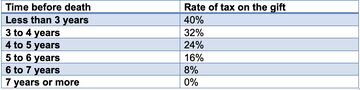
Rate of tax on gifts
What can reduce the bill?
You can reduce a future Inheritance Tax bill through lifetime gifting, using trusts, leaving assets to your spouse or a charity, or taking out a life insurance policy written into trust to cover the eventual charge. Each route suits a different situation, so the right combination depends on your assets and your family's needs.
Everything left to a spouse or civil partner passes free of Inheritance Tax, however large the estate, and any unused nil-rate band transfers to them as well. Gifts to registered charities, whether made in your lifetime or through your will, are also exempt in full, and leaving at least 10% of your net estate to charity through your will brings the rate on the rest down from 40% to 36%. You can give away £3,000 each tax year, plus £250 to as many other people as you like, without any of it counting towards the seven-year taper rules. Larger gifts made regularly out of surplus income, rather than capital, can also fall outside your estate immediately if you can show the gift did not reduce your standard of living.
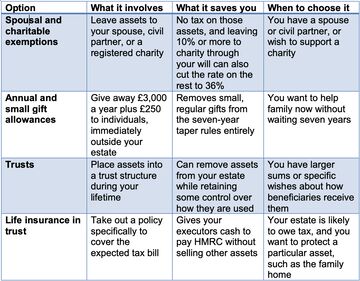
Ways to reduce IHT
How and when is it paid?
Inheritance Tax must usually be paid within six months of the end of the month in which the person died, and it normally has to be paid before HMRC will confirm the position that allows probate to proceed. Missing that deadline starts interest running on the unpaid balance.
As HM Revenue and Customs states in its guidance on paying an Inheritance Tax bill: "You must pay Inheritance Tax by the end of the sixth month after the person died." For you, that means your executors may need to access funds quickly, sometimes before probate is even granted, using specific loan arrangements some banks offer for this purpose. HMRC's published interest rate on late payment currently stands at 7.75%, so leaving the position unresolved is an expensive way to buy time. Where the estate includes property that will take time to sell, HMRC allows the tax on that property to be paid in instalments over ten years, though the first instalment is still due at the normal six-month deadline.
What if I do nothing?
If you do nothing to plan ahead, your executors inherit both the tax bill and the six-month deadline to pay it, often before they have had time to sell property or access other assets to cover the sum due. The frozen thresholds mean this risk grows each year even if your own finances stay exactly the same.
Doing nothing does not remove the liability, it simply passes the pressure onto the people you leave behind, who may need to borrow or sell quickly to meet HMRC's timetable. From 6th April 2027, most unused pension funds will also be brought into the scope of Inheritance Tax for the first time, under changes confirmed by HM Treasury, which means estates that currently sit safely below the threshold may not do so for much longer.
Frequently asked questions
Do I have to pay Inheritance Tax on my parents' house?
You only pay Inheritance Tax on an inherited house if the estate as a whole exceeds the available thresholds, currently £325,000 plus a further £175,000 where the home passes to children or grandchildren.
Can I avoid Inheritance Tax by giving everything away before I die?
Gifts made within seven years of your death are usually added back into your estate on a sliding scale, so giving everything away shortly before death does not remove the liability, though gifts made well in advance can reduce or remove it entirely.
Will my pension be taxed as part of my estate?
Not yet, but from 6th April 2027, most unused pension funds and death benefits will be included in your estate for Inheritance Tax purposes, so pensions that are currently outside your estate may not remain so.
Talk to Pearcelegal
If you are not sure whether your estate would be taxed or want to look at practical ways to reduce a future bill, we can talk you through the options that fit your circumstances. Contact Pearcelegal and we will help you work out where you stand.
Further Reading:
Click here for more information on what estate administration involves after someone dies.
You may also find our guide on how long probate can take helpful when planning the next steps.
For a broader overview of the process, read our complete guide to probate.
Author: Jodie Hall
Jodie Hall is a Solicitor in the Private Client team at Pearcelegal, based in Solihull, West Midlands. She is regulated by the Solicitors Regulation Authority under SRA number 666606.
Jodie joined Pearcelegal in the summer of 2023, having qualified as a solicitor at a firm in London earlier that year. At Pearcelegal, she advises clients on Wills, Lasting Powers of Attorney, Probate and estate administration, and Trust matters. She has also contributed to the firm's legal content, including guidance on the probate process and considerations for making a will.
Client reviews rate Jodie 5.0 out of 5 across six reviews on Review Solicitors, Outside of work, Jodie enjoys experiencing new cuisines, cooking, and visiting National Trust sites.
Pearcelegal itself is authorised and regulated under SRA firm number 423097.
Last reviewed: August 2026
Click here for more information on what happens if you die without a will.
Click here for more information on the law of intestacy explained.

Expert advice for you Book a free consultation
The team at Pearcelegal will be delighted to discuss your legal matters and give you a no-obligation quote.